All Categories
Featured

Evaluating High-Performance AI SEO Tools
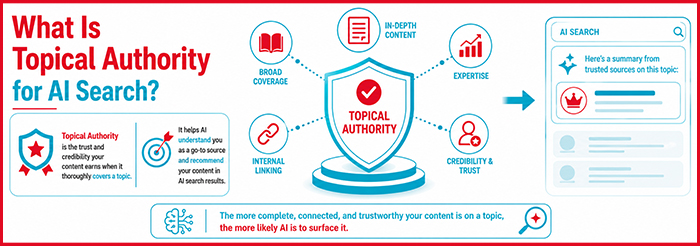
Topical authority describes a site's competence and reliability on a particular topic. And building it through high-quality material is an effective method to develop your know-how and trustworthiness on topics appropriate to your company. This assists with making your target market's trust, enhancing your online search engine rankings, and possibly driving more conversions.
Keep in mind how the website's topical authority is noted as "High" for the term "pet dog training."Topical authority differs from domain authority, which determines a website's overall trustworthiness and influence throughout all subjects.
[target2:anchor_exact1]Strong topical authority enhances search efficiency, as Google normally trusts reliable sources and ranks them greater in its online search engine results pages (SERPs). Here's a more detailed description of the ways topical authority affects SEO: Topical authority develops confidence in your brand name for readers and online search engine alike. This results in more returning website visitors and higher SERP rankings.
Topical authority also leads to natural link structure. Meta and Statista are good examples of websites with strong authority in their niches. Structure topical authority can be a sluggish procedure.
Using AI Writing for Business Visibility
The finest example is when a business outranks a bigger competitor due to its authority in a particular specific niche. Google strives to deliver the finest possible search experiences.
[target1:anchor_exact1]So it prioritizes the most pertinent, practical, and reliable pages when ranking results. And much of Google's algorithm updates and statements have actually reaffirmed its choice for trustworthy, well-informed, and experienced publishers. Here's a quick timeline of updates pressing topical authority to the forefront:: The Panda algorithm upgrade aimed to"decrease rankings for low-quality sitessites which are low-value include for users, copy content from other websites, or websites that are just not extremely beneficial.": Hummingbird(search engine algorithm rewrite )was the dawn of semantic search.: The Practical Content Update altered Google's Expertise, Authoritativeness, Trustworthiness(E-A-T)standards into E-E-A-T including "Experience."The aim was to reward content creators with firsthand experience in their topics.:Google's 2nd Practical Content Update concentrated on elevating material that's useful, top quality, and displays firsthand experience. The update reduced rankings for sites with thin, replicate, and unhelpful material.: The Handy Content Ranking System was incorporated into Google's Core Ranking System, and multiple systems started assessing the helpfulness of contentTopical authority in SEO is especially relevant for news. Google uses a devoted to focus on arise from"news teams that are thoroughly knowledgeable about the area and topic."Here are four basic pointers to start developing topical authority for your brand and site. It's a lot more time -and economical than setting your sights on a broad, extremely competitive field. For instance, you might aim to end up being a trusted voice on knitting patterns as opposed to knitting more broadly. It'll be simpler to produce truly original, high-value material. The fastest way to develop groups of closely related content ideas is to use Semrush's AI-powered Keyword Technique Home Builder. Start by entering a couple of seed keywords (broad terms that relate to your organization)into the tool, choose your target location, and click". "The tool will then supplyideas for pillar pages (primary pages that cover a broad topic )and subpages(pages that explore among the pillar pages' subtopics in higher detail ). Scroll down to"Pages Particulars." Pillar pages are noted most plainly in the table. And its pertinent subpages are listed below. Like this: Here, you can see that "crochet animals,""adorable things to crochet," and"little crochet jobs"could all be ideal subtopics for the larger pillar page. Click the arrow to the left of any pillar page or subpage to expand the row. Which will give you recommendations for how to create a high-quality, valuable piece of content. The more appropriate, premium, search-friendly content you produce, the more topical authority you can construct. You'll needplenty of data-backed content ideas to expand upon your initial topics.Keyword research tools can assist you discover much more appropriate search terms to target with your SEO and material marketing efforts. Here's how it works using Semrush Keyword Magic Tool: Enter a broad topic associated to your service, include your domain to take advantage of our AI-powered function, choose your target place, and hit"."The tool will list all the keyword tips basedon your picked seed term. The more comprehensive your preliminary term, the more recommendations there'll likely bein this case, there are more than 127,000 keywords. By clicking" socks, "we get a list of topic concepts relating to knitted sock patterns. Keywords with substantial search volumes(the average number of regular monthly searches)and lower-than-average keyword difficulty ratings (KD %)are frequently excellent candidates for those simply beginning out. Keyword difficulty approximates how hard it'll be to rank in Google's top 10 for a provided term. Your website's opportunities of success might be less or more depending upon your existing topical authority. Which is why Semrush has included a Personal Keyword Problem (PKD%)score. Which helps you discover the best opportunities for your specific site. So, click the ""filter at the top of the table, choose"," and click "."The table will now reveal you the keywords that are most convenient for your site to rank for. Suggesting that website stands an excellent possibility of ranking near the top if they develop a premium piece of content about this subject. Send suitable terms to Keyword Method Contractor by clicking the ""sign next to a keyword to include it to your existing keyword list: Although you can't fully control who links to your material or discusses your brand, you can attract quality backlinks using some basic techniques. Outreach includes getting in touch with pertinent sites and requesting links to your website. It's the most straightforward method. For a compelling pitch, explain what makes your proposed piece of content special and valuable. It could be the only study of its kind in your industry. And specify. You want those site owners to plainly see the advantage of connecting to you. Dead links prevent the user experience(UX), which suggests lots of site owners are delighted to change them. Reconcile your outreach time by only offering link replacements when they're perfect fits. This is simple with Backlinks. Since you can use it to discover all the domains that link to broken pages on a rival's website. Typically, it's just because the writer hasn't believedto add one. By connecting and discussing the advantage of linking to your material, you may persuade them to change it. Use the Media Monitoring tool within Semrush's Social Toolkit to receive alerts when another website mentions your business. You can quickly discover these chances. Unique, original insight is always best.
"You'll see a tree diagram consisting of questions that Google users who browsed your topic also asked: Click on any of these to explore additional follow-up concerns and use the most appropriate ones to inspire your content.: Here are some tools that can assist you determine your website's dependability and expertise in a topic area: Semrush's Topical Authority metric can help you determine how trustworthiness your website has for specific search terms." There will be a ranking of"Low,"" Moderate, ""Pertinent, "or" High"under the "Topical Authority"label."Near the top of the page, you'll see"Referring Domains"( the number of domains that point back to your website)and"Backlinks" (the overall number of backlinks pointing to your website ).

Latest Posts

The Growing Role of AI in Search

Search Trends for Machine Learning
Using AI Writing for Enterprise Visibility